
Pressure Washing Services in New York City
Hot water, soft wash, rotary surface cleaning and water recovery, selected for the substrate instead of aimed at it.
718-986-8129
Pressure Washing Services
Pressure is the crudest tool on the truck and the one most contractors reach for first. It is also what etches concrete, drives water behind stucco, strips mortar joints and leaves a striped facade that no amount of rewashing fixes. Quality Power Wash builds the method around the substrate: heat where grease is the problem, chemistry and dwell where biological growth is, a rotary surface cleaner where an even flat finish matters, and pressure only to the ceiling the material tolerates. Every method we use ends the same way, with wash water contained and recovered. Request a quote and we will specify the approach in writing before a hose comes off the reel.
What's Included in Pressure Washing Services
- Hot water pressure washing – Heated output for grease, oil, food waste and petroleum residue, where cold water and pressure alone only spread the film.
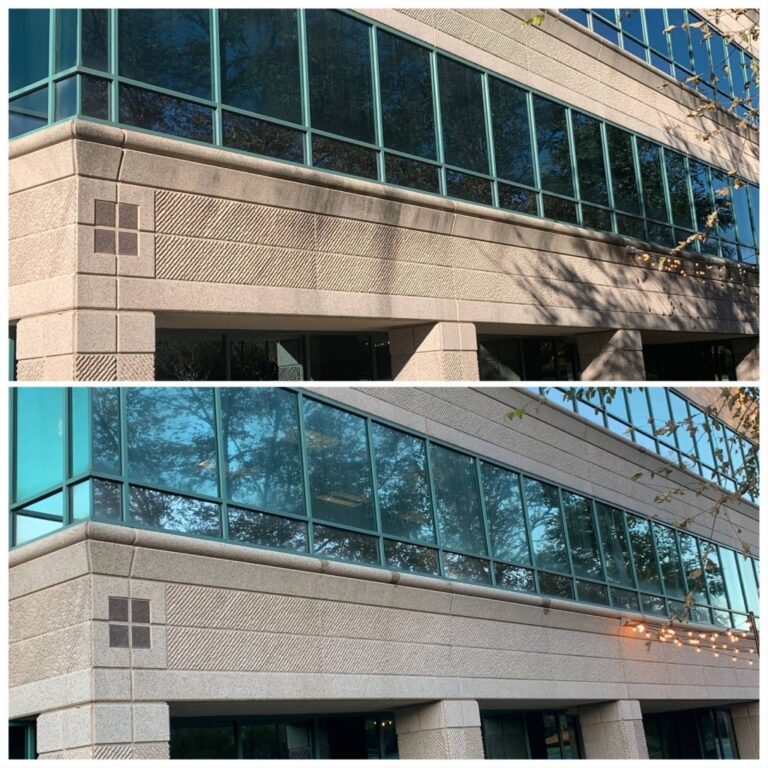
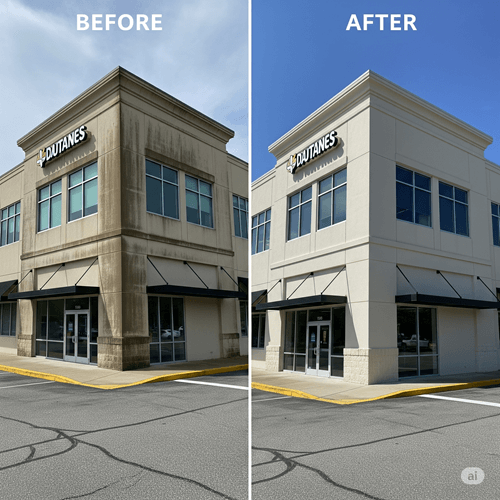
- Soft washing – Low pressure application with appropriate chemistry and dwell time for painted surfaces, stucco, EIFS, older masonry and biological growth.
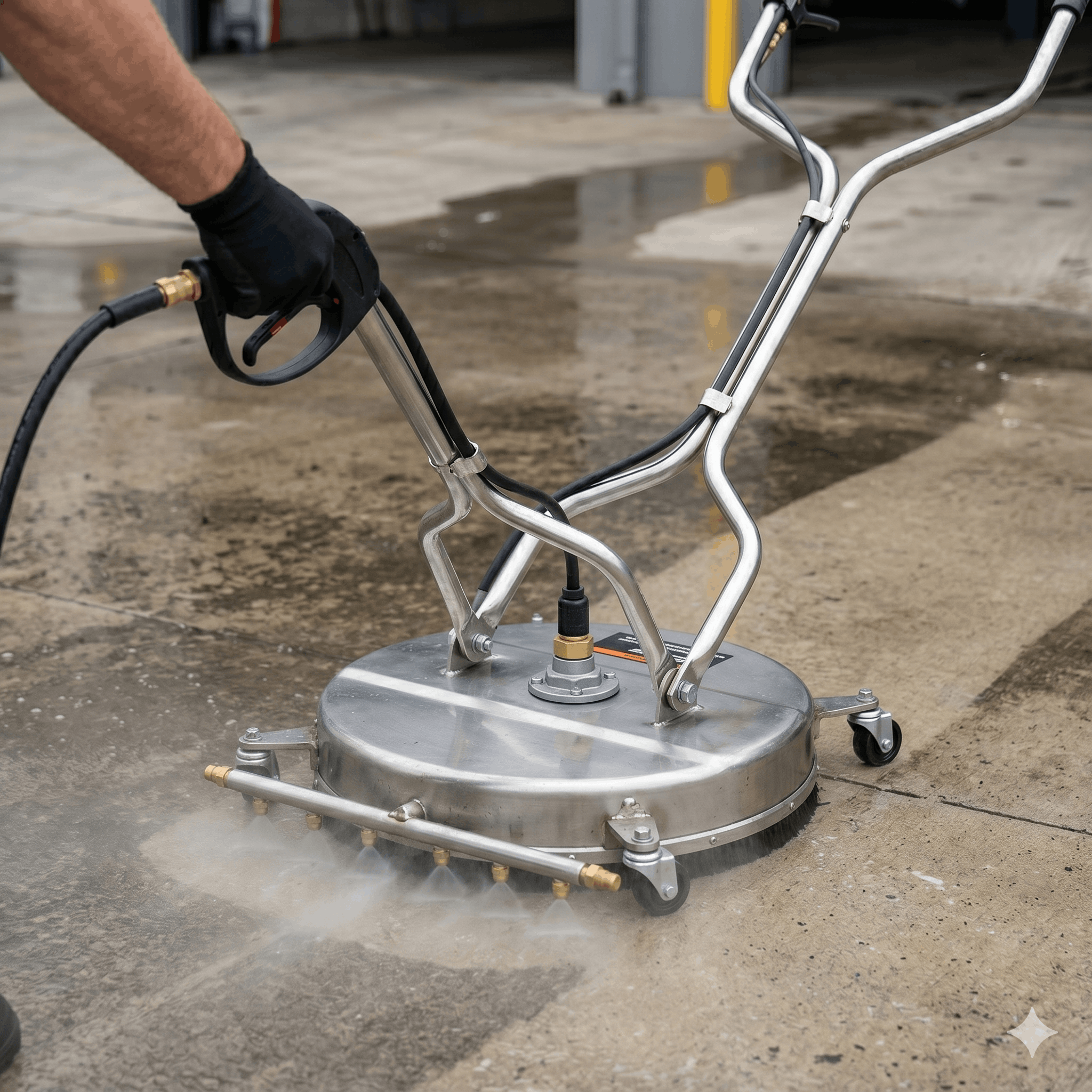
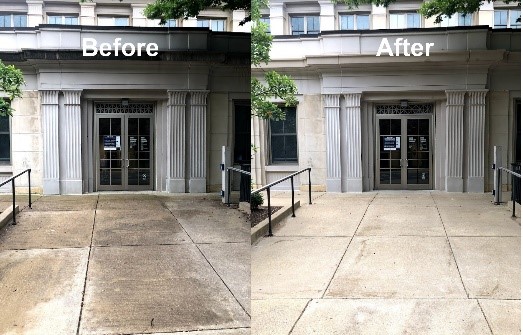
- Rotary surface cleaning – Enclosed spinning bar attachments that deliver an even pass across sidewalks, plazas and dock aprons with no wand striping.
- Targeted stain treatment – Product selected to the stain rather than the surface: rust, efflorescence, tannin, tire marks, gum and adhesive each get their own approach.
- Chemical pre-treatment and dwell – Applying the right cleaner and letting it work is what allows us to drop the pressure and protect the substrate.
- Water recovery and filtration – Drain protection, vacuum recovery and filtration so wash water leaves the site legally rather than through the nearest catch basin.
- Purified water rinsing – Deionized water on glass and finish surfaces so the rinse dries without spotting or mineral residue.
- Test patching and substrate assessment – A documented test panel in a discreet location, approved by you, before the crew commits to an elevation.
- Post-clean protection support – Coordination on sealers and protective coatings where the surface will hold the result longer with them.
Why Quality Power Wash for Pressure Washing Services
Method chosen before pressure
Heat, chemistry, dwell time and flow rate are all dialed before anyone raises the pressure, because pressure is the variable that causes damage.
Written method statement
You get the technique, the pressure ceiling and the products in writing for each surface, so the result is repeatable across visits and crews.
Recovery built into the process
Containment and vacuum recovery are part of the setup on every job, not an upcharge we quote when a client asks about runoff.
Substrate literacy
Brick, limestone, terra cotta, precast, EIFS, anodized aluminum and composite panel all fail differently, and each gets a different setting.
Need pressure washing services scoped for your property?
718-986-8129
How We Work
1. Substrate identification – We identify what the surface actually is, how it has been treated before, and what condition the joints, coatings and sealants are in.
2. Test panel and pressure ceiling – A discreet panel establishes the lowest pressure and mildest chemistry that clears the soil, and that becomes the ceiling for the whole surface.
3. Chemistry and dwell – Cleaner is applied and given time to break the bond. The dwell does the work so the rinse can stay gentle.
4. Rinse pattern and recovery – Consistent overlapping passes in a fixed direction, with drains protected and wash water vacuumed back as the crew moves.
5. Verification and method record – The finished surface is checked in daylight against the approved panel and the exact method is recorded so the next visit reproduces it.
Water, Chemistry and Discharge Compliance
Method compliance is mostly about two things: what you put on the surface and where the water goes afterward. Both are regulated in New York City, and both are where corner-cutting shows up first.
- Nothing but stormwater to a storm sewer – Title 15 RCNY 19-02 states that no substance other than stormwater or allowable runoff may be discharged into a City storm sewer. Catch basins inside the work zone are matted and bermed before water is turned on.
- Numeric limits that apply to recovered water – Title 15 RCNY 19-03 caps non-polar material at 50 mg/L for combined and sanitary sewers, prohibits pH below 5.0 or above 12.0, and prohibits wastewater above 150 degrees Fahrenheit. Hot water work is staged so recovered water cools and is filtered before disposal.
- Excluded materials – The same rule excludes fats, oils, grease, paint waste, ashes, sand, mud and construction materials from the sewer system entirely, which is why degreasing and graffiti work require capture rather than dilution.
- Hydrant supply – Where site water is unavailable we operate under a DEP Permit to Use a Hydrant with a reduced pressure zone backflow preventer installed by a licensed master plumber, which is what keeps our supply from contaminating the City main.
- Product selection – We favor EPA Safer Choice certified products, which are evaluated ingredient by ingredient against the Safer Choice Standard and are required to perform against a leading conventional brand without damaging surfaces. The certification applies to the product, not to us.
- Noise and hours – Administrative Code 24-218 prohibits unreasonable noise at any hour, so equipment placement, hose routing and start times get planned around occupied buildings rather than assumed.
Who We Help with Pressure Washing Services
This page is for the person who has already been quoted by three contractors and wants to know what separates them. If you manage a building with mixed substrates, have had a bad wash go wrong before, or need to hand a method statement to an owner or a board, this is the level of specification we work at. It applies equally to office buildings, apartment buildings and warehouses.
- Buildings with mixed or delicate substrates such as stucco, EIFS, terra cotta or painted masonry
- Properties that have been damaged by a previous high pressure wash
- Owners and boards who need a written method statement before approving work
- Facilities with heavy grease or petroleum soil that cold water will not touch
- Sites with no on-site water source or restricted drainage
- Multi-building portfolios that need a repeatable specification across crews
Frequently Asked Questions
What is the difference between power washing, pressure washing and soft washing?
Pressure washing uses unheated water at high pressure. Power washing adds heat, which is what breaks down grease, oil and food residue rather than just pushing it around. Soft washing drops the pressure to roughly garden hose levels and lets cleaning solution and dwell time do the work, which is what delicate substrates and biological growth actually require. Most commercial properties need all three on different surfaces, which is why the method gets specified surface by surface.
What pressure is safe for my building?
There is no single answer, and any contractor who gives you one without seeing the surface is guessing. Sound concrete tolerates far more than lime mortar, aged stucco or painted brick. We establish the ceiling with a test panel in a discreet location, get it approved, and hold the whole elevation to it. That panel is also your evidence if anyone questions the work later.
When do you use hot water instead of cold?
Whenever the soil is fat based or petroleum based: restaurant frontage, dumpster pads, loading docks, drive-through lanes, garage floors and fleet areas. Heat changes the chemistry of the problem. On general dirt, algae and atmospheric soiling, heat adds cost without adding much result, so we do not use it.
What happens to the runoff?
It is contained and recovered. Drains in the work zone are protected before water is turned on, wash water is vacuumed and filtered, and disposal follows the sewer rules rather than the path of least resistance. Title 15 RCNY 19-02 allows only stormwater or allowable runoff into a storm sewer, and 19-03 sets hard limits on what can enter the combined and sanitary system.
Do you use bleach or harsh chemicals on the building?
We use the mildest chemistry that clears the soil, and we favor EPA Safer Choice certified products where the surface and soil allow. On biological growth some surfaces genuinely need a sodium hypochlorite based solution at a controlled dilution, with plantings pre-wet and rinsed. We will tell you which products are going on your property by name before the work starts.
Do you need water and power from our building?
It helps and it lowers the cost, but it is not required. Our trucks carry tanks and generators, and where a site has no usable supply we can operate on a DEP hydrant permit with a backflow preventer. We settle this during the walkthrough rather than on the morning of the job.
Get Started with Pressure Washing Services
Quality Power Wash specifies the method before the machine, on properties across Manhattan, Brooklyn, Queens, The Bronx and Staten Island. Call 718-986-8129 or use our contact form for a written scope today.
718-986-8129