
Graffiti Removal and Specialty Cleaning in NYC
The problems a general wash will not solve: tags, scratchiti, flattened gum, adhesive, rust bloom and petroleum staining.
718-986-8129
Specialty Cleaning Services
Specialty work is what is left when the general wash is done. A tag on a rolling gate, gum pressed into a plaza, a decade of grease fanning out from a kitchen door, rust bleeding down from a railing, adhesive where somebody stripped a poster off a limestone base. Each of these has a different chemistry and a different failure mode, and the fastest way to ruin a surface is to attack all of them the same way. Quality Power Wash identifies the medium and the substrate first, then works up from the least aggressive method that will actually clear it. Request a quote and we will tell you honestly what will come out and what will only lighten.
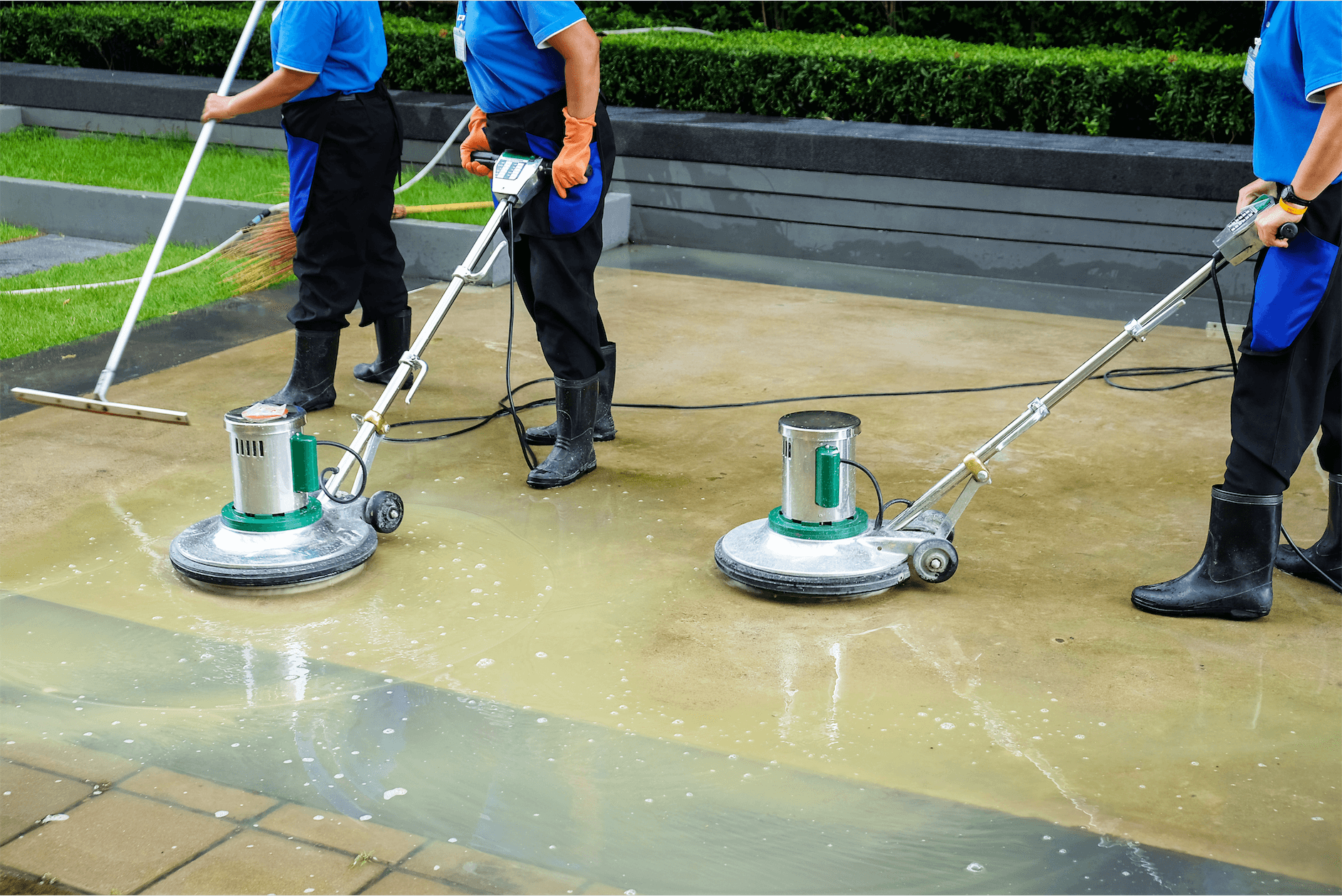
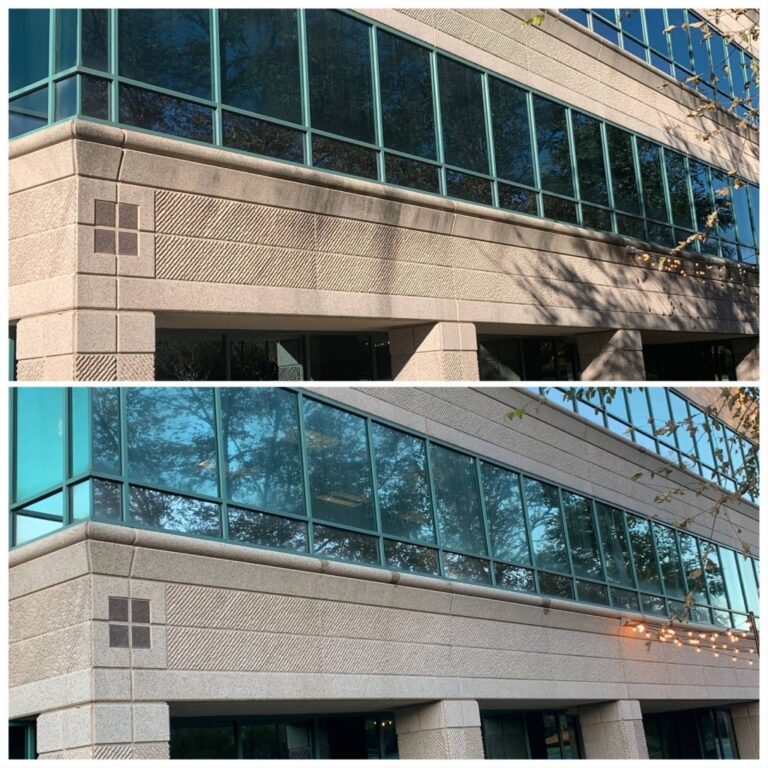
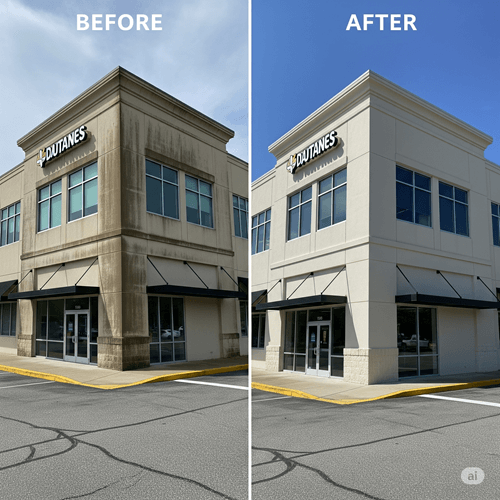
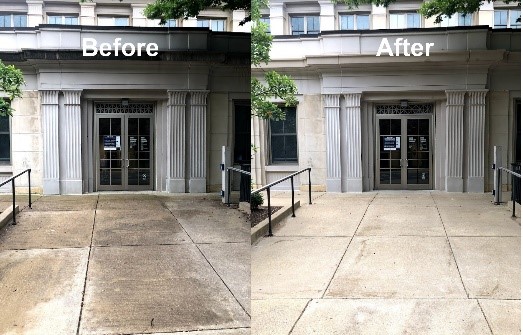
What's Included in Graffiti Removal and Specialty Cleaning
- Graffiti removal – Spray paint, marker, roller and etch tags removed with methods selected for the substrate rather than one solvent used on everything.
- Anti-graffiti coating – Sacrificial and permanent protective coatings on repeat-target surfaces, so the next tag comes off with a wash instead of a crew.
- Scratchiti and etched glass – Scratched and acid-etched glass and stainless assessed for polishing or replacement, with an honest answer on which it needs.
- Gum removal – Flattened gum on sidewalks, plazas, platforms and entry areas, cleared with heat and targeted treatment on a route schedule.
- Sticker, poster and adhesive removal – Flyers, decals, tape residue and glue lifted without shadowing the surface underneath or stripping paint.
- Oil and grease stain removal – Petroleum and food grease drawn out of concrete and asphalt with degreasers and dwell rather than pressure alone.
- Rust, calcium and efflorescence – Metallic and mineral staining reduced chemically, on masonry, concrete and stone where abrasion would leave a permanent mark.
- Bird dropping cleanup and sanitizing – Ledges, entryways, signage and canopies cleared and sanitized, with a conversation about deterrents if it keeps happening.
- Dumpster pad and corral degreasing – The worst square footage on most properties, put on a recurring wash and deodorize schedule.
- Rapid response – Priority scheduling for tags and vandalism on customer-facing frontage, because a tag left up attracts more.
Why Quality Power Wash for Graffiti Removal and Specialty Cleaning
Least aggressive method first
We escalate: solvent, then heat, then media if the substrate can take it. Most removal damage happens because a crew started at the top of that ladder.
Substrate honesty
Porous limestone, unsealed brick and painted metal each have a realistic ceiling. We tell you before the job whether you are getting removal or improvement.
Coating as the actual fix
Repeat-target surfaces do not need repeat removal, they need a sacrificial coating so the next incident is a wash rather than a mobilization.
Residue captured
Paint and solvent residue is contained and collected, because paint waste is specifically excluded from the sewer system.
Need graffiti removal and specialty cleaning scoped for your property?
718-986-8129
How We Work
1. Identify the medium and the substrate – Aerosol, marker, latex, etch and adhesive all behave differently, and the surface underneath sets the ceiling on what can be used.
2. Inconspicuous test patch – A small area out of sight establishes whether the method works and whether it shadows or lightens the surrounding surface.
3. Escalate only as needed – We start with the mildest effective approach and step up in stages, stopping at the point where the tag clears and the substrate is intact.
4. Capture the residue – Paint solids, solvent and rinse are contained at the base and collected rather than allowed to run to a catch basin or a planting bed.
5. Coat and set a repeat plan – Where a surface is a known target we apply a protective coating and agree a response time for the next incident, which is usually cheaper than repeat removals.
Chemistry, Residue Capture and Compliance
Graffiti and specialty work uses the strongest chemistry we carry, on the most sensitive surfaces, in the most public locations. That combination is exactly where the discharge rules bite hardest.
- Paint waste is excluded from the sewer – Title 15 RCNY 19-03 specifically excludes paint waste, along with fats, oils, grease and construction materials, from the combined and sanitary sewers. Removal residue is captured at the base of the wall and collected, not rinsed away.
- Nothing but stormwater to a catch basin – Title 15 RCNY 19-02 permits only stormwater or allowable runoff into a City storm sewer. On a public sidewalk that means drain protection goes down before the first application, every time.
- pH and temperature limits – The same rule prohibits discharge below pH 5.0 or above 12.0 and above 150 degrees Fahrenheit, which matters because both graffiti strippers and hot water work can sit outside those ranges before capture and neutralization.
- Product selection – We use EPA Safer Choice certified products wherever they will clear the medium, and we name the product when they will not. Safer Choice evaluates products, not contractors, so the honest claim is about what we buy, not what we are.
- Public sidewalk work – Administrative Code 16-118 requires the abutting sidewalk and the first eighteen inches of roadway to be kept free of refuse and penalizes pushing debris into the street. Chips, solids and masking material are bagged and hauled.
- Crew protection – Solvent-based removal is done with the personal protective equipment, ventilation and handling practices the product’s safety data sheet requires, and safety data sheets are available for anything used on your property.
- Coordination with City programs – The Department of Sanitation has operated a free graffiti removal program for property owners. Eligibility and availability change, so check the current DSNY page before relying on it, and use us where the timeline, the substrate or the location makes the City route impractical.
Who We Help with Graffiti Removal and Specialty Cleaning
Specialty work is usually urgent and usually visible. It gets called in by retail managers who opened to a tagged gate, restaurants dealing with grease and gum on the frontage, property managers with a recurring tag problem on a rolling shutter, and schools clearing a courtyard before Monday. Warehouses and parking lots call about the petroleum side of it.
- Retail and storefront operators hit overnight and opening in the morning
- Property managers with repeat-target walls, shutters and loading doors
- Restaurants with grease fans, gum and adhesive on customer frontage
- Schools and campuses clearing courtyards, walls and playground surfaces
- Warehouses and parking facilities with heavy petroleum staining
- Building owners who want a protective coating rather than another removal invoice
Frequently Asked Questions
How quickly can you remove graffiti?
For customer-facing frontage we prioritize it, because a tag that stays up attracts more tags within days. The realistic constraint is not our schedule, it is the substrate: a coated rolling gate can be cleared same visit, while porous limestone or unsealed brick needs testing and a staged approach. Tell us the surface when you call and we will give you a straight timeline.
Will removal damage the surface underneath?
It can, and this is where most damage in the trade happens. Aggressive solvent or blasting on a porous or painted surface leaves a clean patch that reads as damage from across the street. We test in an inconspicuous spot, start with the mildest effective method and stop at the point the tag clears. On some surfaces the honest outcome is significant improvement rather than complete removal, and we say so before invoicing.
Does the City remove graffiti for free?
The Department of Sanitation has run a free graffiti removal program for property owners, but eligibility, scope and availability have changed over time, so check the current DSNY page before you plan around it. Owners typically hire privately when they need a specific timeline, when the surface needs a careful method, or when the tag is somewhere the program does not cover.
What about scratchiti on glass and stainless?
Scratched and acid-etched glass cannot be cleaned off. It is either polished, which works within limits and depends on depth, or the pane is replaced. We assess it and tell you which one you are looking at instead of selling a polish that will not hold.
Where does the paint residue go?
It is captured. Paint waste is specifically excluded from the New York City sewer system under Title 15 RCNY 19-03, and only stormwater or allowable runoff may enter a storm sewer under 19-02. We contain at the base of the surface, collect the solids and rinse, and dispose of both through a legal route.
Do you handle gum and grease as a recurring service?
Yes, and that is usually the right structure for it. Gum and grease reaccumulate on a predictable curve on food and high-footfall frontage, so a short scheduled visit every few weeks costs less and looks better than an annual deep clean. See sidewalk cleaning for how those routes are built.
Get Started with Graffiti Removal and Specialty Cleaning
Quality Power Wash handles graffiti, gum, adhesive, rust and grease across Manhattan, Brooklyn, Queens, The Bronx and Staten Island, with substrate-safe methods and captured residue. Call 718-986-8129 or use our contact form for a fast assessment today.
718-986-8129