
Facade & Exterior Building Cleaning in New York
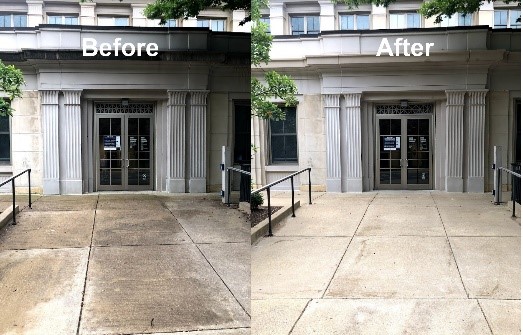
Restorative cleaning on masonry, metal panel and curtain wall, planned around the access method and documented for the owner’s file.
718-986-8129
Exterior Building Cleaning
A New York facade fails visually long before it fails structurally. Carbon deposits from traffic settle into the pores of the masonry, water tracks down from a failed sealant joint and leaves a stain the width of a building, efflorescence blooms after a wet winter and biological growth takes the north elevation. Quality Power Wash cleans facades restoratively: substrate identified, condition surveyed, test panel approved, then a staged low pressure clean that removes the soiling without opening a joint or stripping the surface. The access plan and the documentation come with it, because on a building over six stories the paperwork is half the job.
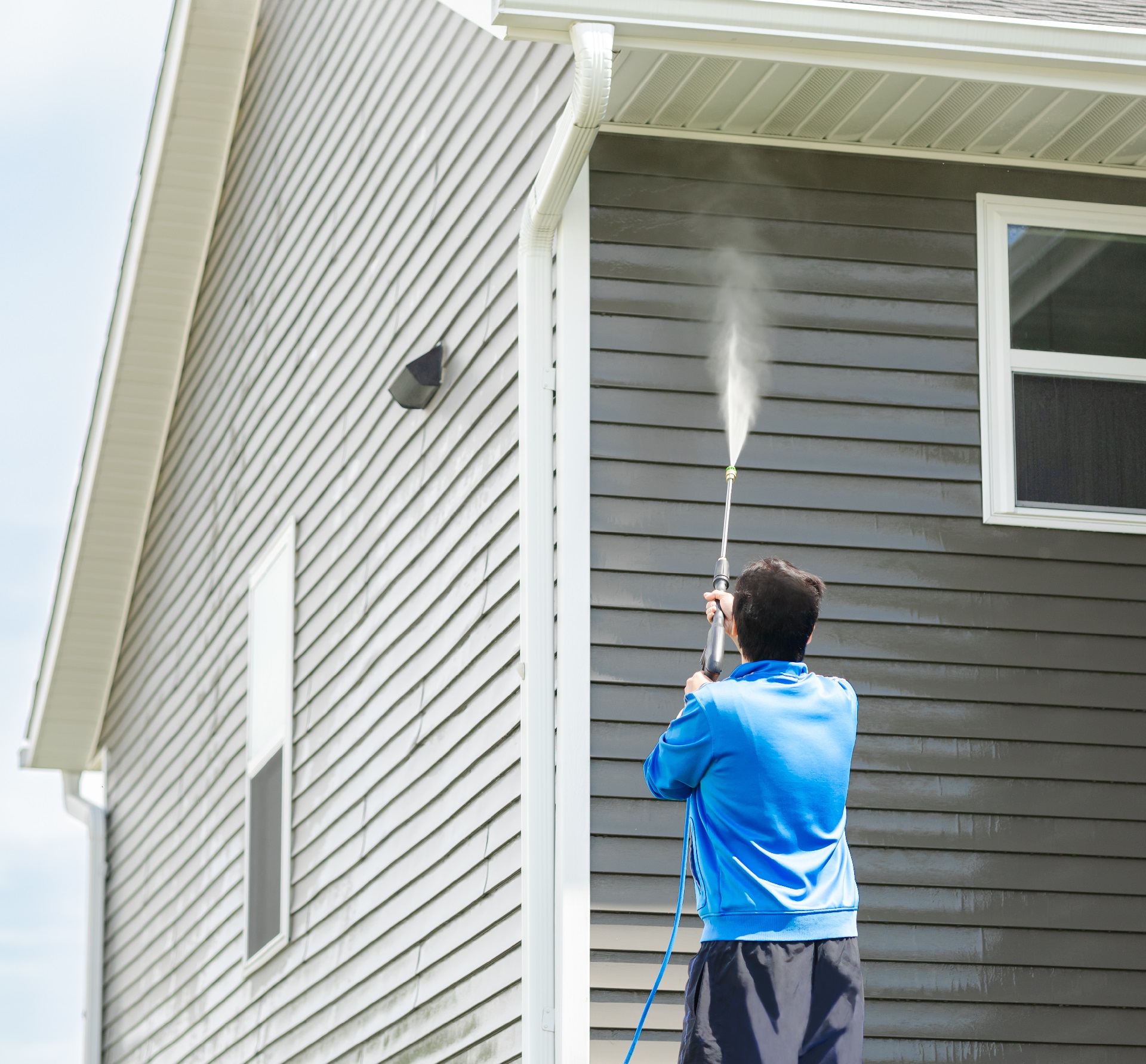
What's Included in Facade and Exterior Building Cleaning
- Brick and masonry washing – Carbon and atmospheric soiling lifted from brick and mortar at pressures that do not open the joints or scour the face.
- Limestone, terra cotta and precast – Poultice and low pressure methods on porous and glazed decorative stone where aggressive washing causes permanent damage.
- Metal panel and curtain wall – Anodized aluminum, composite panel and painted metal cleaned with pH-appropriate products that will not haze or streak the finish.
- Stucco and EIFS – Soft washing only, because these systems will take water behind the surface and hold it if you hit them with pressure.
- Efflorescence and mineral deposits – Salt bloom, calcium and lime run-off removed and the source discussed, because it will return if the water path is not addressed.
- Rust and oxidation staining – Staining from anchors, lintels, railings and signage removed with reducing agents rather than abrasion.
- Biological growth removal – Algae, mold and lichen on shaded and north-facing elevations treated with dwell and low pressure rinse.
- Awning, canopy and signage cleaning – Fabric and rigid canopies, entry surrounds and illuminated signage handled at the same visit as the elevation behind them.
- Post-repair and post-construction cleanup – Mortar haze, sealant smears, adhesive and overspray removed after pointing, repair or construction work.
- Storefront and base detail – The lower ten feet that carries the traffic film, the flyers, the tags and the stickers, brought up to the same standard as the rest.
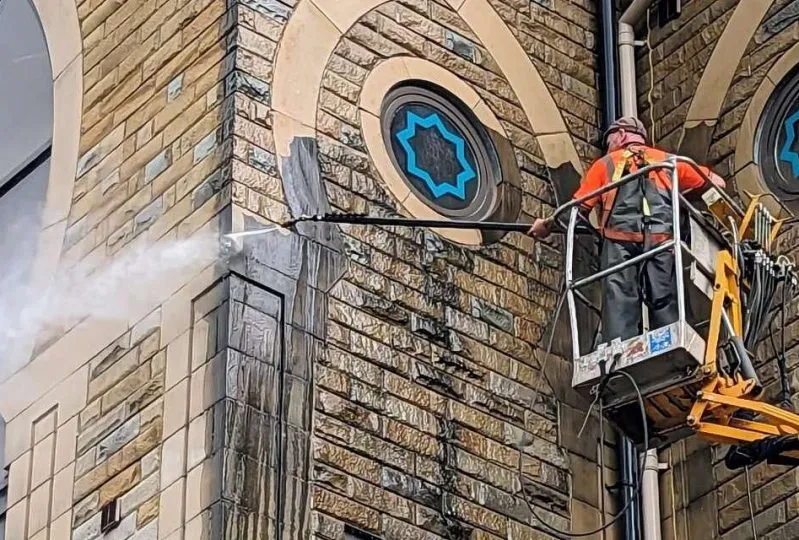
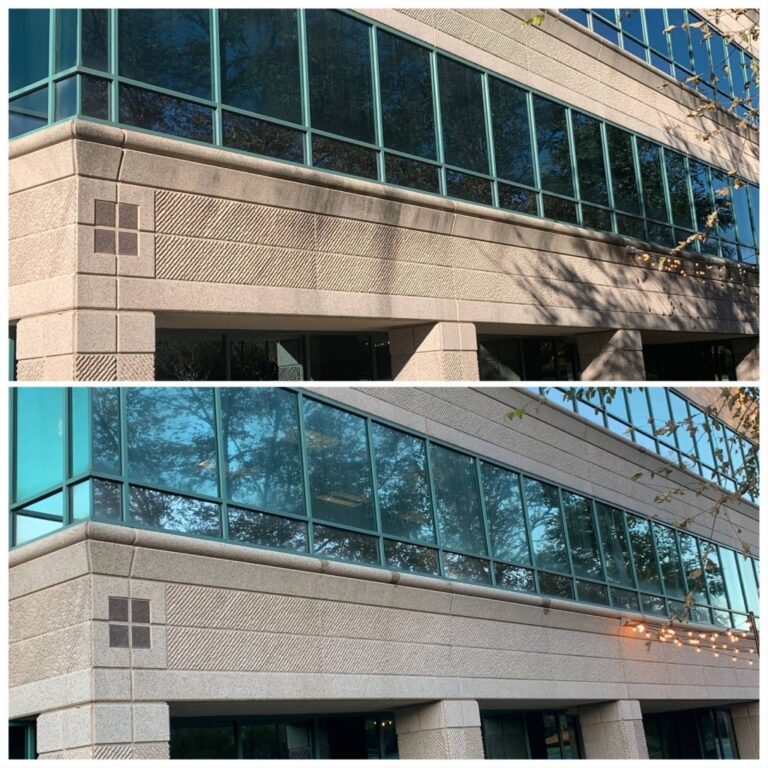
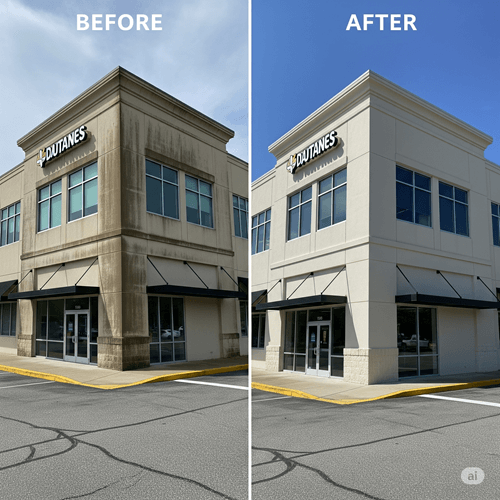
Why Quality Power Wash for Facade and Exterior Building Cleaning
- Substrate first, method second – We identify what the elevation is made of and how it has been treated before anything is applied, because the wrong product on terra cotta or anodized aluminum is not reversible.
- Access planned, not improvised – Rigging, lift or pole access is decided in advance with the drop zone, the pedestrian protection and the water routing all worked out on paper.
- Approved test panel on every elevation – You approve a physical sample before the crew commits, which protects both the building and the working relationship.
- A closeout file the owner can keep – Photographs by elevation, the method used, the products applied and the dates, which is exactly what a board or an owner wants six months later.
Need facade and exterior building cleaning scoped for your property?
718-986-8129
How We Work
1. Condition survey and substrate mapping – Every elevation is surveyed and mapped: material, soiling type, joint and sealant condition, existing coatings, and anything that has to be protected or avoided.
2. Access and rigging plan – We select and document the access method, whether that is suspended scaffold under licensed rigger supervision, an aerial lift, or water-fed pole from grade, along with pedestrian protection and drop zone.
3. Test panel approval – A sample area is cleaned in a discreet location and signed off by you, which fixes the standard and the method for the rest of the building.
4. Staged low pressure cleaning – Work runs top down elevation by elevation with plantings and glazing protected, drains matted, and rinse water directed to a recovery point.
5. Owner sign-off and closeout file – Final walkthrough, photographs by elevation and a written record of methods and products delivered for the building’s maintenance file.
Height Access, Safety Certification and FISP Context
Facade work is the part of exterior cleaning where the rules actually have teeth, because the work happens above people’s heads. Property owners carry the exposure if a contractor gets the access piece wrong. This is the framework we work inside.
- Fall protection – Crews work under OSHA requirements: 29 CFR 1910 Subpart D covers general industry walking and working surfaces, and 29 CFR 1926 Subpart L governs scaffolds, where single-point and two-point adjustable suspension scaffolds require both a personal fall arrest system and a guardrail system.
- Powered platforms – Where a building has a permanently installed building maintenance unit, 29 CFR 1910.66 applies. That standard expressly defines building maintenance to include window cleaning, caulking, metal polishing and reglazing, and it does not cover temporary swing stages.
- Suspended scaffold certification in NYC – The Department of Buildings requires workers on suspended scaffolds to complete a 16-Hour Suspended Scaffold User course from a DOB-approved provider. The 32-hour course is the Supervisor credential, which is a different qualification and is often misquoted.
- Rigger supervision – DOB requires a designated foreman, licensed sign hanger or licensed rigger on site to supervise suspended scaffold operations, and workers must hold a Certificate of Fitness issued by that licensed rigger.
- FISP and Local Law 11 context – The Facade Inspection Safety Program under Administrative Code 28-302 and 1 RCNY 103-04 requires buildings taller than six stories to be inspected every five years by a Qualified Exterior Wall Inspector. Cycle 10 runs 2025 to 2029: sub-cycle A closes February 2027, sub-cycle B February 2028, sub-cycle C February 2029.
- What we do and do not do on FISP – We are not a filing party. FISP reports are filed by a Qualified Exterior Wall Inspector, who is a Registered Design Professional. What we do is schedule cleaning around the inspection and repair sequence, and clean up after pointing and repair work so the elevation photographs properly.
- Containment at height – Rinse water from an elevation still has to land somewhere. Catch basins in the drop zone are protected under Title 15 RCNY 19-02, and recovery is set up at grade before work starts above.
- Insurance documentation – Certificates of insurance naming the owner and managing agent are issued before mobilization, and New York workers’ compensation and disability coverage are carried as required under Workers’ Compensation Law sections 2, 3 and 202.
Who We Help with Facade and Exterior Building Cleaning
Facade cleaning is bought by people with a documented obligation: managing agents, co-op and condo boards, owners’ representatives and facilities directors at institutions. It gets triggered by a FISP cycle, a repair project finishing, a new tenant signing, or a board that has finally lost patience with how the building looks from the street. Apartment buildings and office buildings make up most of the work.
- Co-op and condo boards preparing for or recovering from a FISP cycle
- Managing agents responsible for building presentation across a portfolio
- Owners completing pointing, sealant or facade repair work that needs cleanup
- Institutional and landmark-adjacent properties with sensitive substrates
- Mixed-use buildings where the retail base and the residential elevation need different methods
- New ownership or new management taking over a neglected asset
Frequently Asked Questions
What is Local Law 11, and do you handle FISP compliance?
Local Law 11 is the common name for the Facade Inspection Safety Program, now codified at Administrative Code 28-302 and 1 RCNY 103-04. It requires buildings taller than six stories to have the exterior walls inspected every five years by a Qualified Exterior Wall Inspector, who files the report with the Department of Buildings. We are not that party and cannot file for you. What we do is clean around the inspection and repair sequence so the elevation is presentable and photographable when it matters.
What cycle is FISP in right now?
Cycle 10 covers 2025 through 2029 and is split by the last digit of the block number. Sub-cycle A, for blocks ending 4, 5, 6 and 9, runs to February 2027. Sub-cycle B, blocks ending 0, 7 and 8, runs to February 2028. Sub-cycle C, blocks ending 1, 2 and 3, runs to February 2029. Your QEWI will confirm which applies to your address.
How often should a building facade be cleaned?
Most New York elevations look right on a 12 to 24 month interval, but exposure drives it more than the calendar. A street-facing elevation on a bus route loads carbon faster than a courtyard elevation. North elevations grow biological film. Buildings near construction pick up dust in months. We usually recommend a full clean, then an assessment at 12 months rather than committing to an interval blind.
Will pressure washing damage historic or landmark masonry?
High pressure absolutely will, which is why we do not use it on aged masonry. Soft washing with appropriate chemistry and dwell removes soiling without eroding the face of the brick or opening mortar joints. On sensitive substrates we test a discreet panel, get written approval, and document the method for the building’s file.
How do you reach the upper floors?
It depends on the building. Water-fed pole from grade covers the lower elevations. Aerial lifts work where there is street access and the permits allow it. Above that we use suspended scaffold, under licensed rigger supervision, with workers holding the DOB 16-Hour Suspended Scaffold User certificate. The access method is decided and documented before the job is priced, not after.
Can you clean the facade after our repair contractor finishes?
That is one of the better times to do it. Pointing, sealant work and stone repair leave mortar haze, smears and overspray that come off far more easily when they are fresh. We coordinate directly with the repair contractor’s schedule so the cleaning follows behind the trades rather than competing with them.
Are you insured for work at height, and can you provide a certificate?
Yes. Certificates of insurance naming the owner and managing agent go out before mobilization, and we carry New York workers’ compensation and disability coverage as required for employers. Send us your building’s specific additional insured and limit requirements with the scope request and we will confirm them in writing.
Get Started with Facade and Exterior Building Cleaning
Quality Power Wash cleans facades across Manhattan, Brooklyn, Queens, The Bronx and Staten Island, with a documented method, a planned access route and a closeout file for the building. Call 718-986-8129 or use our contact form to schedule a survey today.
718-986-8129