
Sidewalk and Concrete Cleaning in NYC
Gum, grease, salt and ground-in traffic soil removed from the surfaces your customers, tenants and inspectors actually stand on.
718-986-8129
Surface & Concrete Cleaning
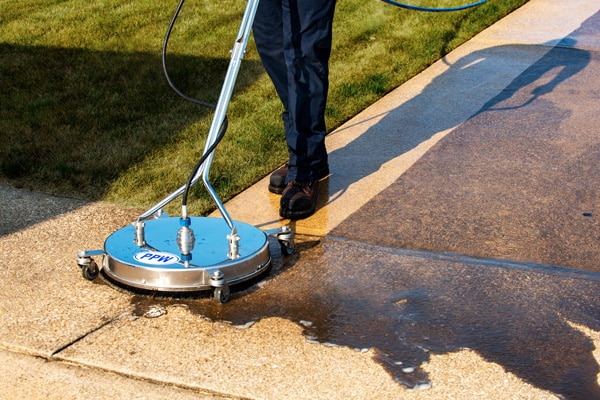
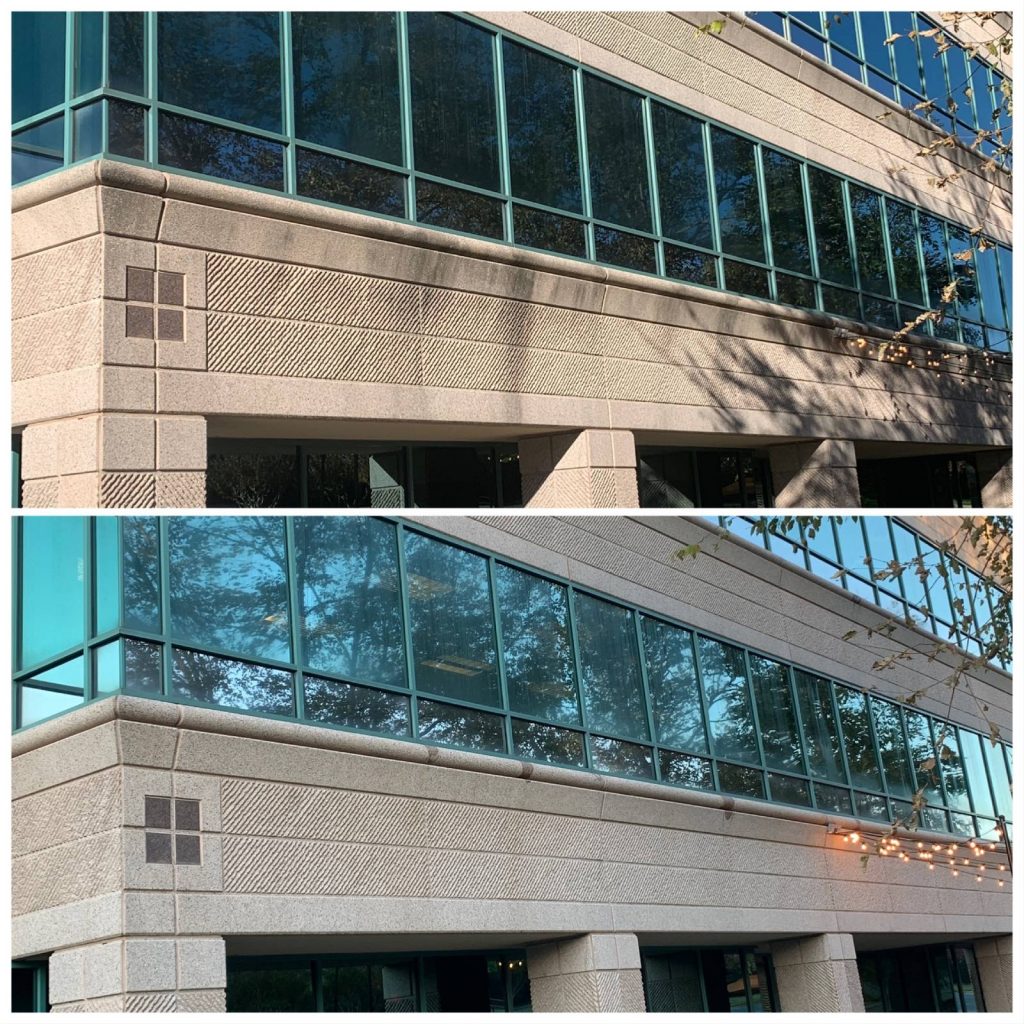
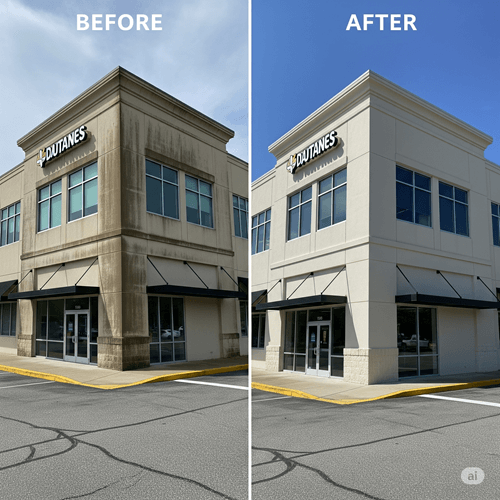
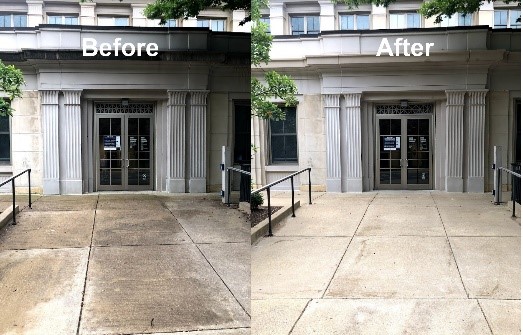
The sidewalk is the only part of your property that every customer, tenant, inspector and passerby touches. It is also the surface that collects the worst of it: gum pressed flat by ten thousand shoes, grease tracked out of a kitchen, rock salt eating the flags all winter, tree pit mud, and the dark traffic film that makes new concrete look twenty years old. Quality Power Wash runs rotary surface cleaners that pull that off evenly, treats the stains that a general pass will not touch, and captures the debris instead of flushing it toward the curb, which is itself a violation.
What's Included in Sidewalk and Concrete Cleaning
- Sidewalk and flag cleaning – Even rotary surface cleaner passes across the full width, edge to edge, with no wand striping and no missed seams.
- Gum removal – Heat and targeted treatment on flattened gum, scheduled on a route for frontage that reaccumulates every month.
- Grease and oil stain treatment – Hot water and degreaser on the fan of grease that spreads from kitchen doors, dumpster pads and service entrances.
- Entryway and vestibule surfaces – Thresholds, mats areas, recessed entries and the first few feet inside the door where the outside gets carried in.
- Plaza and courtyard cleaning – Pavers, stamped concrete and large open hardscape cleaned in a consistent pattern so the finish reads as one surface.
- Loading zone and dock apron – Heavy petroleum and rubber deposits at truck positions, bumpers and trailer pads, degreased rather than smeared.
- Curb, tree pit and perimeter detail – The edges that make a clean sidewalk look unfinished if they are skipped, including curb faces and pit surrounds.
- Salt and winter residue removal – Chloride residue and the white bloom it leaves cleared in spring before it works further into the surface.
- Rust and efflorescence on concrete – Staining from railings, planters, fasteners and mineral migration treated chemically rather than ground off.
- Sealing and protection support – Coordination on penetrating sealers where a sealed surface will hold the result and clean faster next time.
Why Quality Power Wash for Sidewalk and Concrete Cleaning
Even finish across the whole flag
Surface cleaners, not wands, which is the difference between a sidewalk that looks cleaned and one that looks striped.
Debris captured, not moved
We collect and haul what comes off. Flushing it into the roadway is precisely what the Sanitation code penalizes.
Built for recurring routes
High-footfall frontage does not need a deep clean once a year, it needs a short predictable visit every few weeks, and we price it that way.
Pedestrian-aware crews
Cones, wet floor signage, hose routing and staged sections so a public sidewalk stays passable and you do not inherit a trip claim.
Need sidewalk and concrete cleaning scoped for your property?
718-986-8129
How We Work
1. Pedestrian and traffic plan – We stage the work in sections with signage and cone routing so the sidewalk stays usable and the crew is never working around foot traffic blind.
2. Dry sweep and debris capture – Loose litter, leaves, cigarette ends and grit are swept and bagged first, because washing that material is how it ends up in the roadway and the catch basin.
3. Drain protection – Catch basins and trench drains inside the work area are matted and bermed before any water is turned on.
4. Surface cleaner pass – Overlapping passes at a consistent speed and pressure across the full flag, so the finish is uniform rather than patchy.
5. Spot treatment and recovery – Gum, grease, rust and adhesive get individual treatment after the general pass, and wash water is vacuumed back as the crew works.
6. Final sweep and reopen – Edges detailed, standing water pulled, signage collected and the section handed back dry enough to walk.
Sidewalk Rules, Owner Liability and Runoff
Sidewalk work sits at the intersection of two things New York takes seriously: what you owe the public who walks on it, and where the water goes. Both are commonly misdescribed by contractors, so here is the accurate version.
- Keeping the sidewalk clear – Administrative Code 16-118 requires every owner, lessee, tenant or occupant to keep the abutting sidewalk, flagging and curbstone free from obstruction and nuisance, and to remove refuse from the sidewalk and the roadway extending one and one half feet from the curb.
- Sweeping into the street is the violation – The same section penalizes sweeping or flushing debris into the roadway. DSNY’s penalty schedule sets sweep-out at 75, 250 and 350 dollars for first, second and third offenses, and dirty sidewalk at 100 dollars, with escalation for repeats at the same location within twelve months.
- What the law does not say – There is no New York City law mandating that a property be power washed. Section 16-118 is titled Littering Prohibited and never mentions washing at all. Any contractor selling you a mandate is selling you something that does not exist.
- Owner liability for the sidewalk – Administrative Code 7-210 makes the owner of abutting real property liable for personal injury caused by failure to maintain the sidewalk in a reasonably safe condition, expressly including the negligent failure to remove snow, ice, dirt or other material. Owner-occupied one, two and three family homes used exclusively as residences are exempt. Commercial property is not.
- Runoff – Title 15 RCNY 19-02 permits only stormwater or allowable runoff into a City storm sewer or catch basin, and 19-03 excludes fats, oils and grease from the combined and sanitary sewers with a 50 mg/L cap on non-polar material. On greasy frontage, capture is not optional.
- Slip resistance and the ADA – Section 302.1 of the 2010 ADA Standards requires floor and ground surfaces on an accessible route to be stable, firm and slip resistant, but the Standards deliberately set no minimum coefficient of friction. Anyone quoting you a 0.6 friction requirement is citing a non-mandatory 1991 appendix that was not carried forward.
- Working hours – Administrative Code 24-218 prohibits unreasonable noise at any hour. We schedule sidewalk work around residential neighbors and occupied floors rather than assuming an overnight slot is automatically permitted.
Who We Help with Sidewalk and Concrete Cleaning
Anybody who fronts a public sidewalk in this city has this problem, but it hits hardest where footfall and food meet. Restaurants with outdoor dining, retail on a busy corridor, apartment buildings with a shared entry, and parking lots where the apron meets the walk all end up on a recurring schedule rather than a one-off clean.
- Restaurants, cafes and bars with outdoor dining setups and heavy frontage traffic
- Retail storefronts, plazas and shopping centers on high-footfall corridors
- Apartment buildings and mixed-use properties with shared entries and courtyards
- Office buildings where the plaza is the first thing a visitor sees
- Warehouses and facilities with dock aprons and truck traffic
- Property managers who need a documented cleaning record across several addresses
Frequently Asked Questions
Is the property owner responsible for cleaning the sidewalk in NYC?
Largely yes, and in two separate ways. Administrative Code 16-118 requires owners, lessees, tenants and occupants to keep the abutting sidewalk and the first eighteen inches of roadway free of refuse, with DSNY penalties for a dirty sidewalk or for sweeping debris into the street. Separately, Administrative Code 7-210 makes owners of commercial and larger residential property civilly liable for injuries caused by failure to maintain the sidewalk in a reasonably safe condition, including from dirt or other material. Neither law requires washing specifically, but both make a neglected sidewalk expensive.
How often should a commercial sidewalk be cleaned?
Restaurant and food frontage in a busy corridor generally needs service every two to four weeks, because grease and gum reaccumulate on a predictable curve. General retail and office frontage holds up on a monthly to quarterly interval. Buildings with low footfall can go seasonal. The point of a route is that a short frequent visit costs less than an annual restoration of a surface that has been left to load up.
Will pressure washing damage or etch my concrete?
It will if the pressure is wrong or the operator lingers. Etching, wand striping and surface paste removal are all avoidable, and they are why we use enclosed rotary surface cleaners at a controlled pressure and a consistent travel speed rather than a wand. Older, softer or previously damaged concrete gets tested first.
How do you get gum and oil off concrete?
They are different problems. Gum needs heat and a targeted treatment that breaks the polymer bond, then a pass to lift it. Oil and grease need hot water and a degreaser with dwell time, because cold water at high pressure just drives the film deeper into the pores. Long-standing oil that has been there for years sometimes lightens rather than disappears, and we will tell you that before you pay for it.
Where does the dirty water go?
Debris is swept and bagged before washing starts, catch basins in the work zone are matted and bermed, and wash water is vacuumed and disposed of legally. Title 15 RCNY 19-02 allows only stormwater or allowable runoff into a City storm sewer, and grease-laden water in particular is excluded from the sewer system under 19-03.
Can you work overnight or early morning?
Yes, and on public sidewalks it is usually the better option because the surface needs to be walkable during business hours. We do plan around occupied residential floors, since Administrative Code 24-218 prohibits unreasonable noise at any hour, so the right slot is a conversation rather than an assumption.
Get Started with Sidewalk and Concrete Cleaning
Quality Power Wash keeps sidewalks, plazas and entryways clean across Manhattan, Brooklyn, Queens, The Bronx and Staten Island, on recurring routes with debris captured and hauled. Call 718-986-8129 or use our contact form to set up a route today.
718-986-8129